
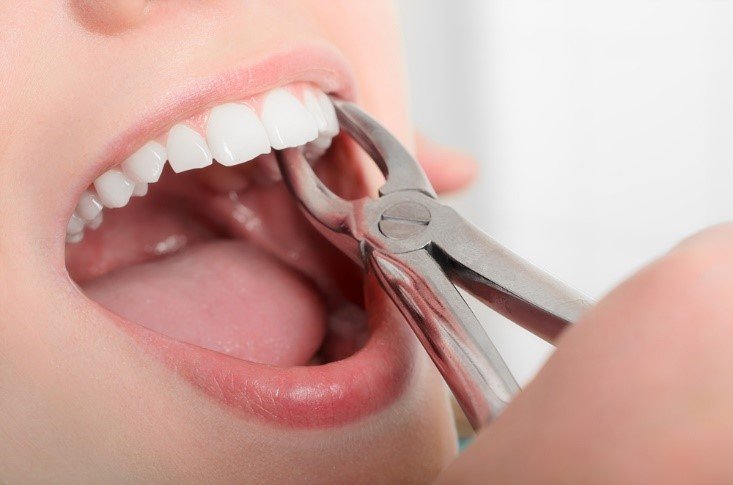
What Is a Tooth Extraction?
A tooth extraction is the removal of a tooth from its socket in the jawbone. While dentists always try to save natural teeth, sometimes extraction is the best option for your oral health. At Klinik Perigigian Putramahkota in Mahkota Cheras just 5 minutes from UTAR Sungai Long, we perform safe, painless extractions using modern techniques and proper anesthesia to ensure your comfort.
Think of a tooth extraction as a “last resort” treatment—we only recommend it when saving the tooth is no longer possible or when it’s causing more harm than good.
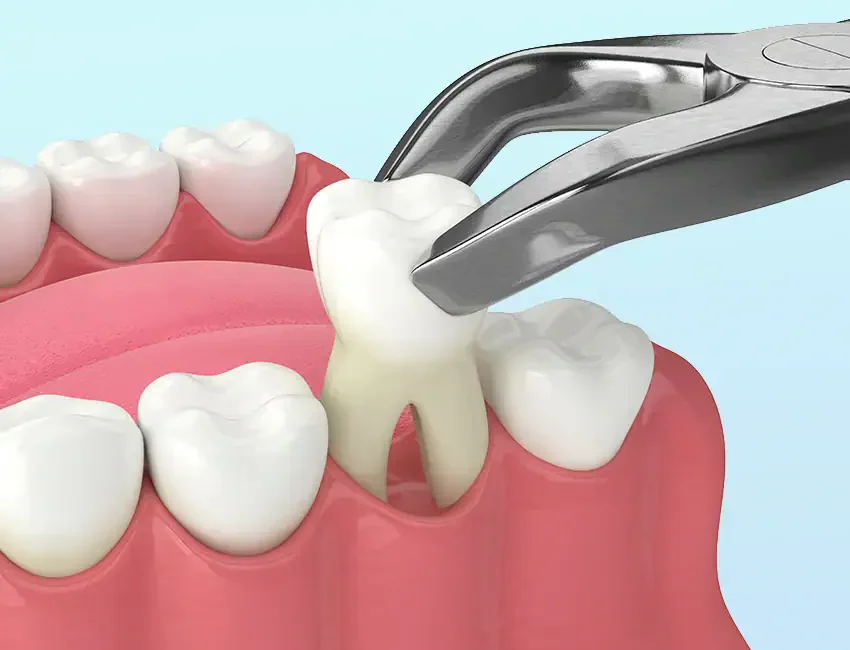
Dental extraction procedure
Why Do Teeth Need to Be Extracted?
Common Reasons for Tooth Extraction
1. Severe Tooth Decay
•Cavity too large to fill
•Decay extends below gum line
•Tooth cannot be restored
•Root is severely compromised
2. Advanced Gum Disease (Periodontitis)
•Bone loss around tooth
•Tooth is loose and unstable
•Infection spreads to bone
•Tooth cannot be saved
3. Broken or Cracked Teeth
•Crack extends below gum line
•Cannot be repaired with crown
•Fracture compromises tooth structure
•Infection risk is high
4. Impacted Teeth
•Tooth stuck under gum or bone
•Cannot erupt properly
•Causes pain or infection
•Blocks other teeth
5. Orthodontic Reasons
•Overcrowding requires space
•Tooth is in wrong position
•Braces need room to work
•Extraction creates alignment space
6. Infection or Abscess
•Root infection (pulpitis)
•Bacterial infection at root
•Swelling and pain
•Antibiotics don’t help
7. Failed Root Canal
•Root canal treatment unsuccessful
•Infection persists
•Tooth remains painful
•Extraction is final option
8. Trauma or Injury
•Tooth knocked out
•Severe fracture
•Cannot be reattached
•Extraction is necessary
9. Impending Tooth Loss
•Severe mobility
•Bone loss too advanced
•Tooth will fall out anyway
•Better to extract and plan replacement
10. Preventive Reasons
•Tooth is source of infection
•Affects overall health
•Compromises immune system
•Extraction prevents complications
Types of Tooth Extractions
1. Simple Extraction
A simple extraction is used when the tooth is visible and easily accessible.
When Used:
•Tooth is fully erupted
•Tooth is not impacted
•Roots are not curved
•Tooth is loose
Procedure:
1.Anesthesia applied
2.Dentist loosens tooth with elevator
3.Tooth removed with forceps
4.Socket cleaned
5.Gauze applied to stop bleeding
Time: 15-30 minutes
Pain Level: None (with anesthesia)
Recovery: 7-10 days
2. Surgical Extraction
A surgical extraction is used for impacted or difficult-to-remove teeth.
When Used:
•Tooth is impacted
•Tooth is partially erupted
•Roots are curved or fused
•Tooth is broken below gum line
Procedure:
1.Anesthesia applied (local or IV sedation)
2.Gum tissue lifted to access tooth
3.Bone around tooth may be removed
4.Tooth is sectioned if needed
5.Pieces removed carefully
6.Socket cleaned and sutured
Time: 30-60 minutes
Pain Level: None (with anesthesia)
Recovery: 10-14 days
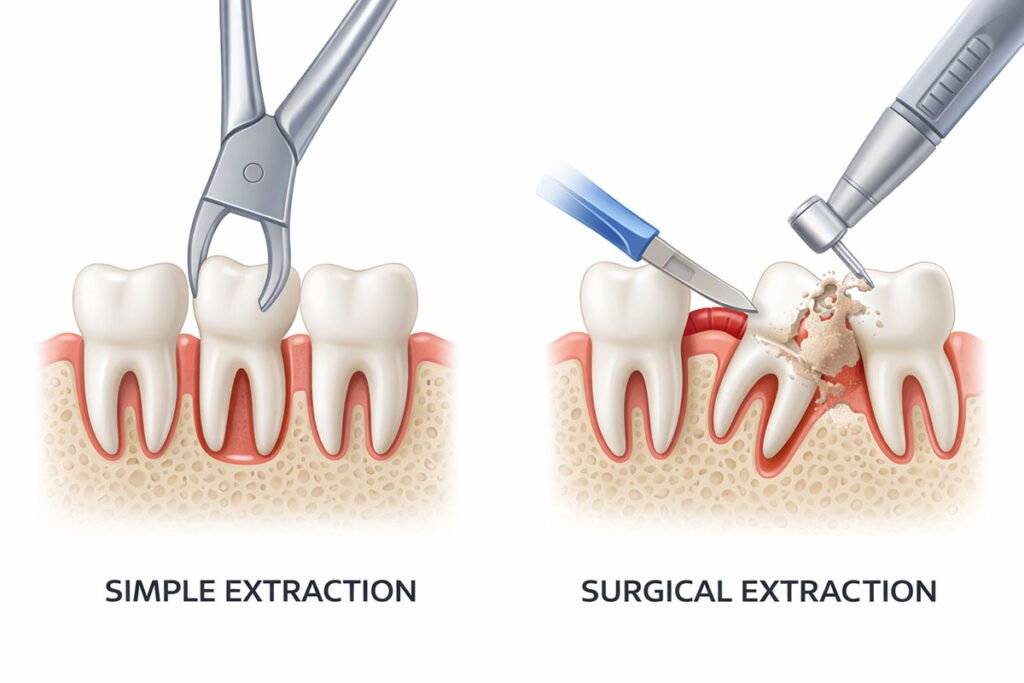
Simple vs surgical extraction comparison
The Tooth Extraction Procedure
Step-by-Step Process
Step 1: Consultation & Examination (10 minutes)
•Dentist examines tooth
•Takes X-rays
•Discusses extraction need
•Explains procedure
•Answers questions
Step 2: Anesthesia (5 minutes)
•Local anesthetic injected
•Numbs tooth and surrounding area
•You won’t feel pain (only pressure)
•Anesthetic takes 5-10 minutes to work
Step 3: Tooth Loosening (5-10 minutes)
•Dentist uses elevator to loosen tooth
•Separates tooth from socket
•Breaks periodontal ligament
•Tooth becomes mobile
Step 4: Tooth Removal (5-10 minutes)
•Dentist uses forceps to remove tooth
•Applies gentle, steady pressure
•Rocks tooth side to side
•Tooth is extracted from socket
Step 5: Socket Cleaning (5 minutes)
•Dentist cleans socket
•Removes debris and bone fragments
•Checks for complications
•Prepares for healing
Step 6: Hemostasis & Closure (5 minutes)
•Gauze applied to stop bleeding
•Pressure applied for 5-10 minutes
•Bleeding usually stops
•Sutures applied if needed (surgical extraction)
Step 7: Aftercare Instructions (5 minutes)
•Dentist provides care instructions
•Prescribes pain medication if needed
•Explains what to expect
•Schedules follow-up
Total Time: 30-60 minutes
Extraction Aftercare
Immediately After Extraction (First 24 Hours)
✅ Bite on Gauze: Keep gauze in place for 30-45 minutes
✅ Apply Ice: 15 minutes on, 15 minutes off for first 6 hours
✅ Rest: Avoid strenuous activity
✅ Elevate Head: Sleep with head elevated on 2-3 pillows
✅ Take Pain Relief: Ibuprofen or paracetamol as needed
✅ Avoid Rinsing: Don’t rinse or spit for 24 hours
✅ Soft Foods: Eat cool, soft foods (ice cream, yogurt, soup)
✅ Avoid Smoking: Don’t smoke for at least 72 hours
✅ Avoid Alcohol: Don’t drink alcohol for 48 hours
Days 2-7 (Healing Phase)
✅ Gentle Rinsing: Rinse with salt water after meals
✅ Warm Compresses: Apply after day 3 to reduce swelling
✅ Continue Pain Relief: As needed for discomfort
✅ Soft Diet: Continue soft foods for 3-5 days
✅ Oral Hygiene: Gently brush other teeth (avoid extraction site)
✅ Avoid Straws: Don’t use straws (can dislodge clot)
✅ Sleep Elevated: Keep head elevated
Week 2+ (Recovery Phase)
✅ Normal Diet: Gradually return to normal foods
✅ Normal Oral Hygiene: Resume normal brushing and flossing
✅ Suture Removal: Remove sutures after 7-10 days
✅ Follow-Up Visit: See dentist for check-up
✅ Plan Replacement: Discuss tooth replacement options
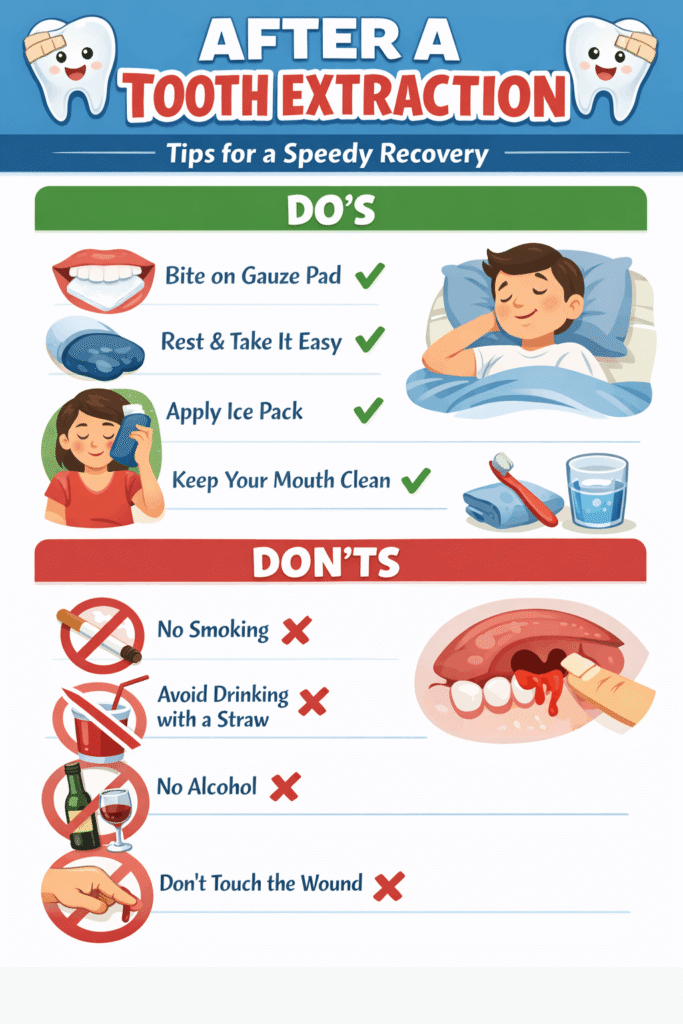
Aftercare instructions
Extraction Comparison Table
| Aspect | Simple Extraction | Surgical Extraction |
| When Used | Visible, loose teeth | Impacted, difficult teeth |
| Procedure Time | 15-30 minutes | 30-60 minutes |
| Anesthesia | Local only | Local or IV sedation |
| Complexity | Low | High |
| Recovery Time | 7-10 days | 10-14 days |
| Pain Level | Minimal | Minimal (with anesthesia) |
| Sutures | Usually not needed | Usually needed |
Common Extraction Complications & Prevention
| Complication | Cause | Prevention |
| Dry Socket | Blood clot dislodges | Avoid rinsing, smoking, straws |
| Infection | Bacteria in socket | Keep area clean, take antibiotics |
| Excessive Bleeding | Clotting disorder | Inform dentist of medications |
| Nerve Damage | Nerve injury during extraction | Experienced dentist, proper technique |
| Swelling | Inflammatory response | Ice first 24 hours, elevation |
| Bruising | Tissue trauma | Ice application, elevation |
| Jaw Stiffness | Muscle soreness | Gentle jaw exercises |
| Sinus Perforation | Upper tooth extraction | Careful technique, follow-up |
Extraction Pain & Recovery Timeline
| Timeline | What to Expect |
| During Procedure | No pain (anesthesia), pressure sensation |
| First 2-3 Hours | Numbness, mild discomfort |
| First 24 Hours | Mild to moderate pain, swelling |
| Days 2-3 | Peak swelling, moderate pain |
| Days 4-7 | Decreasing pain, swelling subsides |
| Week 2 | Minimal pain, mostly healed |
| Week 3-4 | Pain gone, socket healing |
| Months 3-6 | Complete bone healing |
Tooth Extraction Costs in Mahkota Cheras
| Extraction Type | Cost Range |
| Simple Extraction | RM 150-400 |
| Surgical Extraction | RM 400-1,000 |
| Multiple Extractions | RM 1,000-3,000+ |
| IV Sedation (additional) | RM 300-600 |
| Suture Removal | RM 50-100 |
Tooth Replacement Options After Extraction
After extraction, you have several options to replace the missing tooth:
1. Dental Implant
•Artificial tooth root + crown
•Most natural feeling
•Lasts 20+ years
2. Dental Bridge
•Supported by adjacent teeth
•Fixed restoration
•Lasts 5-15 years
3. Removable Partial Denture
•Removable prosthetic
•Replaces one or more teeth
•Affordable option
4. Full Denture
•For multiple missing teeth
•Removable prosthetic
•Affordable option
5. Do Nothing
•Leave space empty
•Not recommended
•Can cause shifting
•May affect bite
Common Extraction Questions
Q: Will extraction hurt?
A: No, local anesthesia numbs the area. You’ll feel pressure but not pain.
Q: How long does extraction take?
A: Simple extraction: 15-30 minutes. Surgical extraction: 30-60 minutes.
Q: Can I eat after extraction?
A: Wait 1-2 hours, then eat soft, cool foods. Avoid hot foods for 24 hours.
Q: How long is recovery?
A: Most healing occurs in 7-10 days. Complete bone healing takes 3-6 months.
Q: Will I need pain medication?
A: Usually mild discomfort managed with over-the-counter pain relief.
Q: Can I go back to work?
A: Most people can return to desk work the next day. Avoid strenuous activity for 3-5 days.
Q: What is dry socket?
A: Painful condition when blood clot dislodges. Prevent by avoiding rinsing, smoking, and straws.
Q: Can I smoke after extraction?
A: Avoid smoking for at least 72 hours. Smoking increases infection risk and delays healing.
Q: Do I need sutures?
A: Simple extractions usually don’t need sutures. Surgical extractions typically do.
Q: What should I do if I have excessive bleeding?
A: Bite on gauze for 30 minutes. If bleeding continues, contact your dentist.
Why Choose Klinik Pergigian Putramahkota for Extractions?
✅ Experienced Dentists – Skilled in all extraction types
✅ Painless Procedure – Proper anesthesia ensures comfort
✅ Modern Techniques – Latest extraction methods
✅ Gentle Handling – Minimizes trauma and complications
✅ Comprehensive Aftercare – Clear instructions for healing
✅ Affordable Pricing – Competitive rates in Mahkota Cheras
✅ Tooth Replacement Options – Help plan replacement
✅ Follow-Up Care – Ensure proper healing
When Extraction Is Necessary
Don’t delay extraction if recommended by your dentist. Delaying can lead to:
•✅ Increased infection
•✅ Bone loss
•✅ Damage to adjacent teeth
•✅ More complex extraction
•✅ Higher costs
•✅ Complications
Ready for Your Extraction?
If you need a tooth extraction, trust Klinik Pergigian Putramahkota for safe, painless removal.
Contact us today:
📞 Phone: +60164892387 / 03-90114487
💬 WhatsApp: +60164892387
📍 Address: 32A, Jalan Temenggung 7/9, Bandar Mahkota Cheras, 43200 Cheras, Selangor
🌐 Website: putramahkotadentalclinic.com
🕐 Hours: 7 Days a Week
Book Your Extraction Appointment Now! We’ll ensure your comfort and quick recovery.